The statewide task force studying reparations for Black Californians will submit its final report to the Legislature on June 29. This conversation was produced as part of KQED’s Juneteenth reparations radio special on June 17. For more on reparations in California, visit kqed.org/reparations.
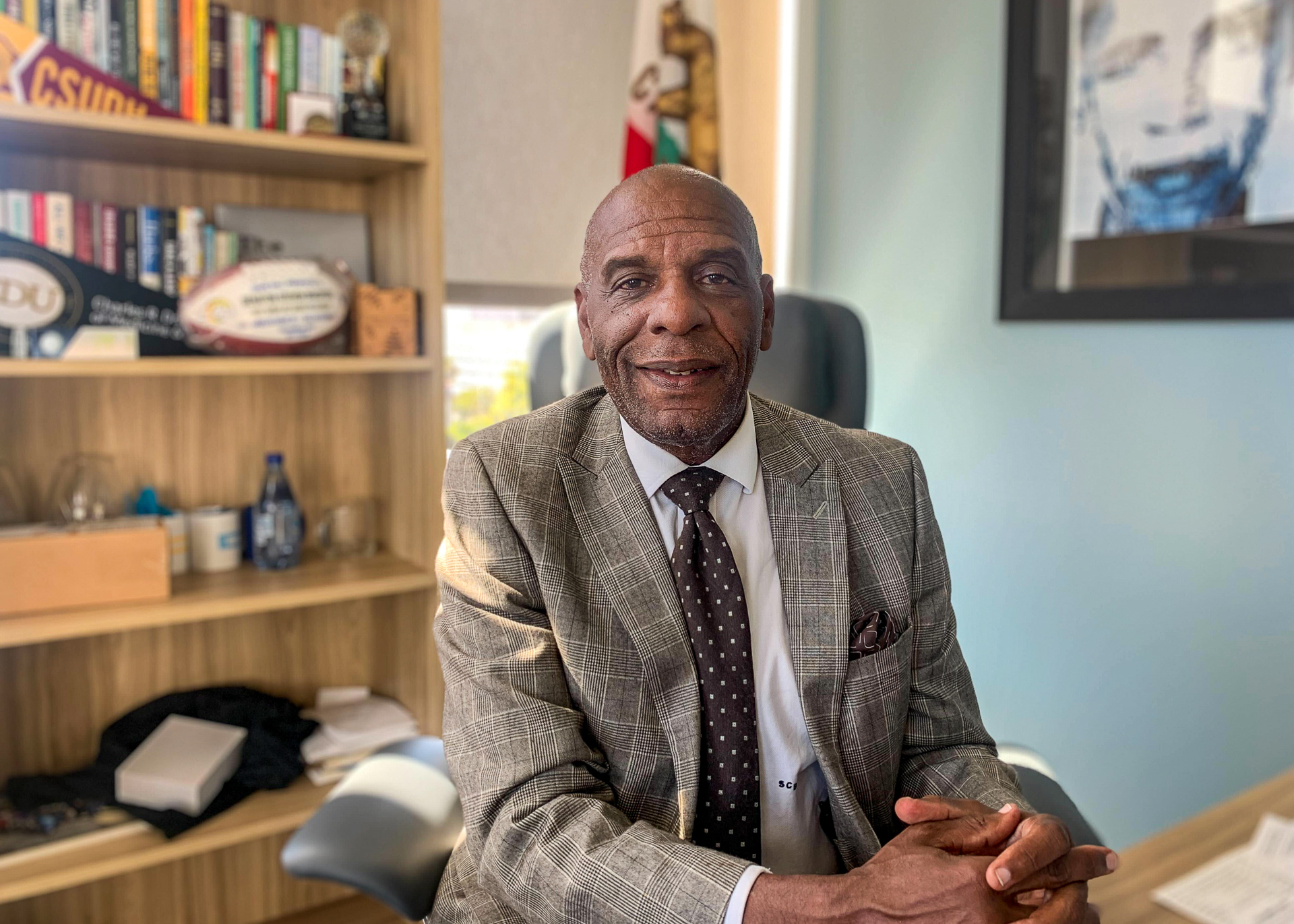
As one of nine people appointed to design the nation’s first statewide reparations plan for Black people, state Sen. Steven Bradford’s work is visionary. But he’ll be the first to tell you he is a realist. The task force studying reparations for Black residents with enslaved ancestors will submit its final report to the Legislature at the end of this month. Early drafts detail a comprehensive plan to compensate Black residents for discriminatory state policies and to prevent discrimination moving forward.
The Los Angeles Democrat and 14-year veteran of the Legislature says the plan is overdue, but emphasizes that it doesn’t mean the changes the report proposes — a formal apology, dozens of policies, direct payments to descendants and a new state agency to manage those payments — will become a reality overnight. To make it happen, he wants to see more lawmakers take the initiative to educate themselves about the state’s history. He urges lawmakers who say they support racial justice to walk the walk for reparations.
As part of our Juneteenth reparations radio takeover, I sat down with Bradford to talk about what awaits the reparations proposal when it reaches the Capitol.
This interview has been edited for brevity and clarity.
Annelise Finney: The state decided to study reparations back in 2020 in the aftermath of the murder of George Floyd and at a moment when there was a lot of energy behind calls for racial justice. It’s now three years later. How would you characterize the appetite for reparations in the Legislature today?
Sen. Steven Bradford: I would say it’s the same that it was a couple of years ago. I don’t think there was ever a strong appetite for reparations here in California or anywhere else in this nation. But the climate was right to move it forward. I’m a realist and I believe that we still have major hurdles. We still are lacking true allies on this issue. I mean, it’s easy to take a knee, as we did three years ago, almost 80 members at the west steps of the Capitol in solidarity for George Floyd and police reform. But that same year, we couldn’t get a police decertification bill out of the Legislature. So it’s one thing to have optics and [another to have] a real movement. Only time will tell how far we can move with this package of bills.
You mentioned the need for allies in this fight. What would allyship in the Legislature look like?
Folks standing up and embracing and having a clear understanding that reparations is not charity, it’s not a handout, it’s not a gift. It’s something that is owed and due to those descendants of slavery here in this country. We had over 250 years of free labor. What built this nation was agriculture and the cotton industry. That’s what made America the wealthy country that it is today, and that was done on the backs of African descendants. People need to understand that. But it’s a lot of folks here in California that still have their head in the sand as to the reality of what slavery meant to this country.
Can legislators like yourself pick and choose parts of the report, or do they have to adopt the entire thing?
It’s probably going to be a selection of things. I think it’s going to be far too detailed for us to do everything in this report. I’m just being realistic here. There’s a lot of detail. And my first challenge is hoping that the Legislature will read the report — first the interim report and then the final report that gives a clear validation and road map as to why these recommendations are being made and why they should be implemented into law.